Saturday, 18 May 2013

Pub doctor

There’s no shortage of reality TV shows nowadays such as The Hotel Inspector taking failing businesses and bringing in some so-called “expert” to tell the owners how to do things better. There was a suggestion in the comments that a similar thing could be done for pubs, to which someone replied that it already had been in the form of Save our Boozer. I’ve never seen this, as the genteel poverty of Curmudgeon Towers does not stretch to pay-TV, but my understanding is that this is basically about getting communities to club together rather than looking in a broader sense at the marketing and general offer of pubs.

There are few pubs you go in where you don’t see something that could be improved and might attract more customers – failing to display a menu outside is one of the most common and obvious examples. You also come across pubs that clearly aren’t making the most of the potential of the site. So there must be considerable mileage in a show of this kind.

On the other hand, more than most other hospitality businesses, the success of pubs is linked to their local geography and demography. Unless you’re in the centre of a large town or city, in a busy tourist hot-spot, or a dining pub seeking to attract car-borne customers from a wide catchment area, you are very much dependent on trade from either local residents or people who are in the area anyway. Yes, it is possible to squander a good opportunity, but it is hard to see how many of the “beached whale” estate pubs could ever be made successful again.

While individual pubs such as the Magnet in Stockport may make a success of a multi-beer alehouse format that draws customers in from the surrounding suburbs, the overall market for this type of pub is finite and it is certainly not a panacea for every failing pub in the town.

The question must also be asked as to what degree improving the attractiveness of one pub simply draws trade from others rather than growing the market as a whole.

Thursday, 16 May 2013

Can drinkers be profiled?

On my most recent visit to Tesco, I was interested to see 4x500ml cans of Old Golden Hen on sale at £5 (normal price £5.99). Canned versions of beers better known as premium bottled ales have been around for some time, although I’ve rarely bought them as I tend to prefer to choose a range of different beers and, in any case, they seldom show a worthwhile price advantage over bottles. Indeed, they can even be more expensive – when Morrisons were selling premium bottles at four for £5.50, they had several four-packs of the same beers in cans at a higher price.

Another factor, although it seems less common now, is that some canned ales claimed to have a non-widget “in can system” that was supposed to make them more like draught beer, but in practice just ended up making them a bit flat. Having said that, a while back I did try canned Directors and found it hard to distinguish from the bottled version.

I’d always perceived the buyers of cans of premium ale as, in general, older and more conservative than buyers of bottles, people who had grown up with cans of Stones and Webster’s Yorkshire Bitter and now moved on to something a bit more upmarket. This was reflected in the canned beers tending to be the more established and staid brands such as Pedigree, Abbot Ale and London Pride.

However, we are now seeing recently-introduced beers put into cans such as Old Golden Hen, Adnams’ Ghost Ship and Thwaites’ Wainwright, which don’t tap into the same heritage and reflect the modern trend towards lighter-coloured, hoppier ales. Does this indicate that canned ales are now reaching out to a younger demographic? I have certainly seen references on social media to younger drinkers taking premium cans on train journeys, and to events like barbeques, where bottles would prove heavy and impractical.

Many US craft brewers put their beer into cans, and indeed from an environmental point of view there is much to be said for cans over bottles as they are lighter, and thus cheaper to transport, and also more easily recycled. It’s likely that over time we will see an ever-growing number of British ales available in cans, but a leap of imagination is required before they start to encroach into the single bottle market. And, as I said in my earlier post, there remains a widespread view that anyone buying a single can is a problem drinker, which would have to be overcome.

Tuesday, 14 May 2013

Can’t see the wood for the trees

To listen to some people, you would get the impression that the main reasons for pub closures were a combination of pubs being poorly run, and being sold off by greedy pub companies acting in association with rapacious supermarkets and property developers. However, this, whether through simple ignorance or a wilful refusal to confront the facts, fails to recognise the wider picture.

In the period since 1979, beer sales in pubs have declined by over 60%, and around a third of the pubs in the country have closed. There has been a marked long-term secular decline in the demand for pubs which goes far beyond the specifics of individual businesses. Obviously, in an overall declining market, it will tend to be the better-run pubs that survive, and the worse-run ones that go to the wall, but the underlying reason for pubs closing en masse is not that they haven’t moved with the times and have failed to give customers what they want. Indeed, the average pub now is much better run and more welcoming that it was in 1979. It’s also the case that many pubs have become unviable due to an unfavourable location despite the best efforts of the licensees.

I asked the question here what difference it would may to the overall pub market if the average pub was run as well as the best. The conclusion was that overall trade would be unlikely to increase by more than a few percentage points. To suggest that pubs could have held on to most of the lost trade by being run differently is frankly ludicrous.

Equally, while I’m sure there have been cases of profitable pubs being sold off for redevelopment as flats or convenience stores, there are few areas of the country where there aren’t plenty of recently-closed pubs in all kinds of locations that would be available to anyone wanting an entry into the trade. There must be at least half a dozen in central Stockport alone. The fact that would-be pub entrepreneurs haven’t snapped these sites up suggests that they don’t see a potential market there, and those who whine that “pubs only close because they’re shit” always seem strangely reluctant to put their money where their mouth is. While matters may be different in some parts of London subject to intense development pressures, I’m not aware of a single pub around here sold for conversion to alternative use that previously could have been said to be thriving.

And, if you fail to understand the true nature of the problem, whether through ignorance or choice, you are never going to come up with a solution.

Saturday, 11 May 2013

Ghostly gold

Adnams’ Ghost Ship and Hawkshead Lakeland Gold are two prime examples of the modern trend of “hop-forward” beers, that can be found in ordinary supermarkets and not just specialist beer shops. Interestingly, neither is particularly golden in colour – both are more a light amber, maybe similar to Robinson’s Unicorn, and certainly darker than classic golden ales such as Thwaites’ Wainwright.

They are of similar strength, Ghost Ship being 4.5%, and Lakeland Gold 4.4%. Both are assertively hoppy, with the Ghost Ship having more of the characteristic “New World” grapefruit notes, whereas Lakeland Gold leans more towards old-fashioned British flinty bitterness. It reminds me of what Holts Bitter could be like twenty-five years ago. Both are excellent beers, some of the most distinctive bottles to be found in mainstream outlets, but for me the Lakeland Gold slightly shades it. An absolutely superb drink, and one I’m happy to pay full whack for in Tesco even if not included in multibuy offers.

Another similar beer, although one that sadly seems to have disappeared from the supermarket shelves, is Thwaites’ Indus IPA, which is also more amber than gold.

Having said that, I’m not averse to a good malt-accented beer too, and I’ve become surprisingly fond of this recently.

Oh, and by the way, no free samples of any of these beers have been provided by the brewers...

Friday, 10 May 2013

Socially unacceptable supping

A recent arrival on the North-West beer blogging scene is Seeing the Lizards. One point that the author M. Lawrenson has addressed is how just going to the pub for a drink has become much less socially acceptable over the years, something that I have referred to on more than one occasion. His post is very true and perceptive.

When I was learning to drink in the late 70s and early 80s, it was entirely normal for responsible, respectable people to just go for a drink or two in a pub. Now, by and large, it isn’t. Many blog readers who regard drinking and pubgoing as a specific leisure pursuit may struggle to appreciate this, but the vast toll of closed pubs in all kinds of areas bears witness to a profound social change.

This has manifested itself in all kinds of subtle ways. Workers are far more reluctant to drink any alcohol at all at lunchtimes, and even to go out at all to the pub for a snack and have a soft drink. To some extent this stems from employers’ policies, but it still happens even when there is no such constraint. They are also far less keen to meet up for drinks after work.

There’s also a much greater unwillingness to drive after drinking any alcohol whatsoever, despite being well within the legal limit. This doesn’t mean that people find another way to go to the pub, they simply don’t go at all. This has implications for most of the other trends I mention. To some extent related to this, the comfortable middle classes are far less likely to be found drinking in pubs than they once were.

Thirty years ago, it was noticeable how a large proportion of pub customers, especially in the more “respectable” pubs, were courting or married couples. Now, unless having a meal, they’re hardly seen at all. In particular, the established middle-aged couple just “going out for a drink” have pretty much entirely vanished.

Lunchtimes throughout the week used to see a variety of customers, whether local workers, unemployed, retired or just on a day off. That has largely disappeared too, and many pubs no longer bother opening at all on weekday lunchtimes. My local pub used to be busy on weekend lunchtimes with groups of social drinkers, who often knew people from other groups and engaged in banter with them. Now, it’s virtually deserted apart from a smattering of diners. When you do go in a wet-led pub at lunchtime or early doors most of the remaining customers often seem to be deadlegs.

Before the ban, smokers used to be some of the keenest traditional drink and chat customers, but now they are banished they are no longer there, or at least much more rarely there.

Pubs can still be busy on weekend evenings, but the traditional baseload trade that used to sustain them during the rest of the week is greatly diminished. People will go out for a skinful on Friday and Saturday nights, but they’re no longer going out for a couple on Mondays and Tuesdays. I go in a few pubs where the old ways still prevail, but virtually all the customers are now over the age of fifty, and that pattern of pubgoing will be gone in twenty years’ time.

It often seems that the only form of alcohol consumption that is acceptable nowadays is slumping in front of the telly once all the chores and responsibilities are done, and cracking open a bottle of Old Speckled Hen to watch the latest Midsomer Murders. Responsible, employed people in relationships just don’t go to the pub for a casual drink any more.

Thursday, 9 May 2013

The lure of lager

There’s nothing to beat a cool, clear, fresh pint of cask beer, bursting with flavour and condition. Unfortunately a substantial minority fail to come anywhere close to that description. More than once, I’ve sat there nursing a pint of warm, flat, vaguely murky liquid and thought to myself “with the benefit of hindsight, wouldn’t I have been better off with a pint of Carling?”

In general, in my regular drinking, I tend to stick to places where I expect to get a decent pint of cask, and so such occasions are pretty rare, although they do happen. The few occurrences I can think of in recent years where I’ve drunk lager on licensed premises have been in restaurants or hotel bars.

However, a couple of years ago I had a week’s holiday touring Scotland, as described here. The main objective was sightseeing, not drinking, and very often I would find myself at lunchtime in establishments with no cask beer just looking for something to wash down my food. So I usually ended up with a pint of standard lager. In my limited experience, I’d say Carling was the least bad of the “big three” – Fosters being very sweet and Carlsberg having a rather grainy flavour. The problem is, though, that while the first few gulps may be cool and refreshing, by the time you get to the bottom of the glass you’ve lost interest. They’re all just fundamentally dull and bland. On one occasion I had nitrokeg Younger’s Tartan Special or suchlike which to my palate was considerably worse than cooking lager.

I also, oddly enough, recently ended up with a pint of Carlsberg in a local Spoons. It was in the middle of their beer festival, and on this occasion all the guest beers that could be ordered as part of the meal deal were some way over 5% which, as I was driving, would not have been a good idea. They had even replaced Ruddles with a festival beer, and Abbot isn’t included in the offer. So I had a Carlsberg in preference to a John Smith’s Extra Smooth. As before, initially refreshing, ultimately dull, with an odd kind of cereal note to it. If it was the only draught beer in the world I might drink more of it, but fortunately in general I don’t have to.

It’s not really surprising, though, that many beer drinkers steer clear of the quality lottery that cask beer can be and choose to stick to something that, while it may not excite, reliably does the job and is unlikely to disappoint. The question must also be asked whether, even though it is often derided, standard lager is actually in any sense a worse product than Coke or Pepsi.

Tuesday, 7 May 2013

Counting the cost

The Morning Advertiser reports (slightly late) on CAMRA’s U-turn over minimum alcohol pricing, mentioning the proposer of the motion (otherwise known as Tandleman) by name. Jonathan Mail, head of public affairs at CAMRA, told the paper “We’re in the process of formulating a new position on below-cost alcohol sales”.

While it’s easy to declare yourself against below-cost selling, in practice it’s very hard to define, as I explained here. Any attempt to set a notional “cost of production” is in effect minimum pricing by the back door, and to subject supplier invoicing to audit would be unbelievably bureaucratic and time-consuming. The only robust and intellectually credible position is to define cost simply as duty and the VAT on duty.

It’s also a complete myth - although a convenient one for those who want to point the finger at the evil supermarkets - that below-cost selling occurs to any significant extent anyway, as it would simply be bad business. It makes no sense whatsoever for supermarkets to sell any substantial proportion of products at a loss, although of course they drive a hard bargain with their suppliers. Loss-leading only works on products such as milk and bread which represent a small proportion of overall spend and which can be easily compared between different retailers.

Thursday, 2 May 2013

A deep draught of history

I have written before about how the creation of the National Inventory of Historic Pub Interiors is one of the best things that CAMRA has ever done, and will prove to be one of the most enduring. While there are still around 50,000 pubs trading in the UK, fewer than 300 retain an interior that is largely unchanged since the pub was built, or even since before the Second World War. Most of these pubs are still very much in business and very often the original interior continues to function very well while providing an atmosphere sadly lacking with so many soulless modern refurbishments. I am fortunate to have one of them as my local – the Nursery in Heaton Norris, Stockport, a splendid multi-roomed, wood-panelled suburban pub little changed since it was built in 1939.

Not before time, CAMRA has now produced a book covering all the National Inventory in a single volume, complete with extensive colour photography, for a very reasonable £9.99. There’s a fuller description (and a lower price for non-members) on Amazon, where it says:

Full-colour guide to over 260 pubs throughout the UK which have interiors of real historic significance - some of them stretching back a century or more. It is the first time ever that these pubs have been collected into a single volume. Illustrated with high quality photography, the guides extensive listings are the product of years of surveying and research by CAMRA volunteers dedicated to preserving and protecting our rich pub heritage. With a foreword by Simon Thurley, Chief Executive of English Heritage.
I haven’t actually laid my hands on a copy yet, but I certainly will be doing, and if the various volumes produced for individual regions are anything to go by it should be very attractively designed and well-written.

These pubs are an important part of both our architectural heritage and social history, and represent something that is much more relevant to the life of ordinary people than stately homes and castles, however splendid they may be. In the 1970s, a liking for “old-fashioned pubs” was very much part of the mainstream of CAMRA, but more recently, with the growing emphasis on new beers and breweries, they have perhaps somewhat slid down the pecking order.

It occurs to me that it might be a good idea for CAMRA, possibly in conjunction with the National Trust, to establish a separate organisation, perhaps called “Friends of Heritage Pubs”, which would allow people with an interest in traditional pubs to contribute directly to championing their cause and resisting unsympathetic and destructive alterations. This could well attract support from many people who aren’t specifically interested in real ale or indeed beer at all. There remains a widespread warm fuzzy feeling about olde-worlde inns that goes far beyond the ranks of CAMRA.

Monday, 29 April 2013

5% down

Today the British Beer and Pub Association released their latest Quarterly Beer Barometer statistics. To be honest, the figures weren’t that different from the previous ones, with an overall year-on-year fall in beer volumes of 5.1% being recorded, as against 4.7% last quarter. So much for the anti-drink lobby constantly bleating about Britain’s ever-growing drink problem.

The fall for the on-trade was in fact slightly less than that for the off-trade, which tends to be more price-sensitive. The previous trend of a steady move from on- to off-trade consumption very much seems to have stalled recently, and it will be interesting to see whether this continues to be reflected in future figures. Another question mark is whether the beer duty cut in the Budget will filter through in to healthier sales figures (or at least a reduction in the rate of decline) in the remainder of the year.

Saturday, 27 April 2013

The house that craft built

Oh no, you might think, not another post about craft beer. But what I’ve been thinking is that “craft beer” is basically an attitude of mind, not a product as such. Real ale is a specific, clearly-defined product. Either a pub sells it, or it doesn’t. Over the years, many pubs have appeared in the Good Beer Guide that only served a single real ale, and some still do. Many of those will have nothing else whatsoever to interest the “discerning” beer drinker.

But put a single keykeg tap in a pub (as if that actually happens) and it doesn’t immediately become a craft beer outlet. The craft ethos requires a single-minded approach to the whole beer offer – the bank of handpumps offering RedWillow, Thornbridge, Summer Wine, Magic Rock, the long line of keg taps, the fridge full of US imports, the blackboards, the bare floorboards, the uncomfortable seating. Plus the inevitable invasion of pretentious hipsters*. While they don’t do cask, BrewDog have the concept off to perfection. And, when I read about that type of outlet, I start dreaming of shabby keg-only Sam Smith’s boozers with frayed bench seating.

In the future we are likely to see an increasingly eclectic choice of beers available on keg in pubs – mostly lager, but so some extent ales too. But the full-on “craft beer bar” will remain essentially a specialist experience confined to city centres and affluent suburban enclaves where there is the clientele to support it. Real ale can take over (most of) the pub world; “craft beer” never will. And what will remain once the trendy beer fad has passed?

* #12 seems to be drinking beer. But does he really represent your desired type of bar clientele?

Monday, 22 April 2013

Backbone discovered in Norwich

Over the past few years there have been several occasions when I have suggested that CAMRA at a national level had entered into a potentially dangerous embrace with the anti-drink lobby in the pursuit of narrow short-term objectives.

However, two developments at their latest Annual General Meeting in Norwich suggest the tide may be starting to turn.

First, motion 8, proposed by the Liverpool branches, was passed, apparently without any speakers against.

8. This Conference requires that the Campaign should actively challenge the health lobby’s anti-alcohol statements to give a more balanced view.
Then, after what reportedly was a very lively debate, Motion 19 was passed by 276 votes to 201.
19. This Conference agrees that CAMRA is on the wrong side of the argument over minimum pricing. It instructs the National Executive to withdraw its support for this measure with immediate effect.
Well done to Tandleman in successfully proposing this motion.

This has to be added to the beer duty cut which, however presented, was actually a substantial across-the-board reverse for the neo-Prohibitionists.

Let’s hope that this signals the beginning of a new fighting spirit in standing up for British beer drinkers, although obviously the proof of the pudding will be in the eating.

Sunday, 21 April 2013

The one that got away

When I was compiling the list of my best pub experiences of recent years, I inadvertently missed off what must rank amongst the top handful, the reason being that I’d noted it down in a different place...
The Great Western, Wolverhampton – Holden’s tied pub hidden away round the back of the station, offering the full range of their beers, three guests and Batham’s superb Best Bitter. Classic front bar and a variety of areas rambling back to a conservatory and beer garden. Lively, bustling atmosphere, busy throughout the day.
The pub hosts the annual meeting of a non beer-related society that I belong to (this one, if you really want to know), and yesterday it was as good as ever. Batham’s sells at a considerable premium over the Holden’s beers (£2.90 to £2.40 for Holden’s Bitter), but still appears to be the best seller. I did a fuller write-up here. I have now amended the original post accordingly, so it now lists eleven pubs, not ten.

Wednesday, 17 April 2013

The world turned upside down

Nothing whatsoever to do with beer, but if you look at maps of the distribution of electoral votes in the US Presidential elections of 1896 and 2000, it’s very striking how the party representation has been pretty much exactly reversed. Red states have become blue, and blue red. And it seems to me that something similar, although maybe not quite so drastic, has happened to the availability of real ale in Britain, at least south of the Scottish border.

Although the organisation rapidly spread throughout the country, the four founder members of CAMRA were London-based journalists, and certainly in the early 1970s the situation for real ale in and around London was pretty bleak. The 1977 Good Beer Guide says that “Greater London is no longer one of the worst counties in England for real ale”, which suggests that a few years previously it had been. Most of the pubs were owned by the “Big Six” national brewers, and the vast majority only sold pressurised beer. Apart from Young’s pubs, all of which sold real ale, there was only a scattering of outlets, and even Fuller’s, who have outlasted Young’s and are now one of the most respected family brewers, sold pressurised beers in most of their pubs. As late as 1977, only 16 out of 111 had real ale.

Outside the capital, the situation was often little better, if at all. The 1977 Guide still describes North Devon and much of Norfolk as “beer deserts”, and says that, apart from the handful of pubs it lists, there’s little to be found in any of Norfolk. In the whole of Cornwall, which must have had getting on for a thousand pubs, only 120 had real ale.

In contrast, across large swathes of the industrial Midlands and North, there were major independent breweries who sold real ale in all or virtually all their pubs – Banks’s & Hansons in the Black Country, Hardy’s & Hanson’s, Home and Shipstone’s in Nottingham, and Boddington’s, Holt’s, Hyde’s, Lees and Robinson’s in and around Manchester. Added to this, there were still massive tied estates belonging to members of the Big Six which were mostly real, such as Bass Mitchells & Butlers across the Midlands and Tetley’s in Yorkshire and on Merseyside. Much of this beer was served by electric pump, so it may not have been immediately obvious that it actually was real until you looked into it more closely. Indeed, it wouldn’t surprise me if in 1975 half the real ale sold in the country (by volume, if not by number of outlets) used electric dispense.

You still sometimes hear it said that when CAMRA was founded, real ale was on the point of disappearing in Britain. In and around London, that may not have been far from the truth, but across the country as a whole the situation was in fact rather healthier. This helped encourage the always rather mistaken view that real ale was something of a proletarian drink.

Fast-forward forty years, and things have been turned on their head. London is enjoying an unprecedented boom in specialist beer pubs and craft beer bars. Across all the rural counties of the South and East, from Cornwall to Norfolk, you would be hard-pressed to find any prominent pub that didn’t serve real ale. The only keg-only outlets would be youth-oriented bars and a few back-street and estate pubs in places like Camborne and Great Yarmouth. Counties like Surrey and Buckinghamshire report over 95% of all pubs selling real ale.

On the other hand, many of the independent brewers in operation in the 1970s have been taken over and their estates scattered to the four winds, Nottingham having suffered especially badly. The Big Six brewers have been broken up and their pubs largely transferred to pub companies which in the 1990s started the systematic removal of real ale except where they saw a clear commercial justification. Most of the surviving backstreet and estate pubs owned by pubcos now only have keg beer – indeed it’s now almost seen as a defining feature of the classic estate pub. I can remember when a pub crawl of Levenshulme in South Manchester included twelve or so pubs with real ale; now there are only two, and none on the main road. Yet a few miles down the road in Didsbury and Chorlton, new bars have opened up and it’s pretty much ubiquitous.

In my home town of Runcorn, as late as the mid-80s, most of the pubs sold real ale, predominantly Greenall’s, and most of those sold mild as well as bitter. Now, with the exception of Wetherspoon’s, there’s virtually none at all except in a few food-oriented pubs on the periphery. Much the same is true of many other industrial towns in the North and Midlands.

So it’s an interesting reversal of fortune how, in many cases, the areas where real ale was once sparse now have it in abundance, and where it was once plentiful it is now rare. And, of course, for at least twenty years the preferred drink of the typical “working man” has been cooking lager, not mild or bitter.

Tuesday, 16 April 2013

This is the end, my friend

Here’s a photo taken today of the latest pub in my local area to be “tinned up”, the Green End in Burnage. As you can see, it’s a massive 1930s building with a hint of Brewer’s Tudor, but owing more to domestic building styles of the period. It was one of the increasingly rare pubs to have its own bowling green. There are a couple of other pubs about a third of a mile away in each direction, but the area isn’t exactly overpubbed and there’s no shortage of nearby housing. Perhaps its situation on the border between leafy Heaton Moor and more downmarket Burnage didn’t help its prospects, as I doubt whether many from Heaton Moor would have wanted to take the short trip down the hill to drink there.

Saturday, 13 April 2013

Abuse of hospitality?

Quite a few pubs, especially those with beer gardens, have signs saying “Only food and drink purchased on the premises may be consumed here”. While that may come across as a touch officious, the signs wouldn’t be there unless there was perceived to be a problem. Nobody would dream of walking into a restaurant, sitting down and unpacking their sandwiches and thermos flask, but there seems to be something about the term “public house” that leads some people to believe that the facilities are there to be used free of charge.

In this post I quoted a comment on a newspaper article complaining about ramblers who made the maximum use of the pub’s warmth and comfort for the minimum outlay. There is even a small sub-set of ramblers who seem to think it’s OK to eat their packed lunch in pub gardens. I also posted here about a customer who sat in a pub and read a paper for half an hour without buying a drink, and one commenter said that the old-school licensee would have spotted that within a couple of minutes and asked whether they did intend to make a purchase.

I know of one busy market-town pub where a group of middle-aged women were in the habit of meeting up one day a week and basically using the place as a social club. Yes, they did buy a few coffees, but certainly less than one each, and took up half the lounge throughout the lunchtime session, squeezing out other customers. Eventually the licensee barred them on the grounds that they weren’t spending enough money.

I’ve sometimes seen groups of young people meet up in a pub and sit around a table with several of them not having bought any drinks. And I’m a member of a non beer related society which has its annual meeting in a pub. For some of them I suspect it may be about the only occasion in the year they actually venture into a pub except when specifically going for a meal, and the basic etiquette that you buy at least a small glass of diet coke seems to elude them.

In this day and age, licensees can’t afford to be too picky about who they let use their pubs, and if a pub is quiet it isn’t really a problem if a group of customers are taking up space but spending very slowly. On the other hand, if the pub is busy you really don’t want large groups taking up your best seats and nursing halves for a couple of hours. Licensees have to be careful that they don’t come across as heavy-handed, which is much less acceptable now than it once was, but to my mind they have the right to expect people who are making use of their heating, lighting, seating and hospitality to put a reasonable amount of money across the bar.

And I haven’t even got on to the subject of non-customers using the pub toilets. To be honest, in these days of widespread public toilet closures, pubs would generate much goodwill if they said that non-customers were allowed to use their toilets on payment of 20p. In the past year I have spotted one pub in Tewkesbury doing precisely that. Although, if there’s a Spoons, there's normally little problem in just walking in and using the loos anyway.

Sunday, 7 April 2013

Local heroes

As promised, here’s a list of my ten favourite pubs within the Stockport MBC area. Not the best beer, or the best in any other sense, but just those that I find most congenial and which encourage me to make a return visit.
  • Arden Arms, Millgate (Robinson’s) – a wonderful, unspoilt pub including a unique snug accessible only through the server, now probably the classiest pub in the town centre, although at times the admittedly excellent food is perhaps allowed to dominate too much
  • Armoury, Edgeley (Robinson’s) – a classic, bustling street-corner local recently given a smart renovation that respected its multi-roomed layout
  • Boar’s Head, Market Place (Sam Smith’s) – prominent market pub that a few years ago received a remodelling that actually involved adding more internal divisions. Vibrant, down-to-earth atmosphere that takes you back to how pubs used to be
  • Crown, Heaton Lane (Free House - pictured) – the best of Stockport’s specialist beer pubs, retaining a multi-roomed layout and a lively atmosphere
  • Davenport Arms, Woodford (Robinson’s) – classic redbrick farmhouse pub dating from around the 1830s, alternatively known as the “Thief’s Neck”. Still has a variety of separate rooms including a genuine tap-room, which is where the best banter is to be had
  • Griffin, Heaton Mersey (Holts) – a modern extension on to an original 1830s building. Has an original glass-fronted bar counter and at least five separate rooms. Sometimes quiet, but when buzzing the atmosphere is great
  • Horse & Farrier, Gatley (Hydes) – prominent, rambling, multi-roomed Hydes pub on the main Gatley crossroads, always has some guest beers and has occasional beer festivals
  • Nursery, Heaton Norris (Hydes) – my local pub, a largely untouched building dating from 1939 with a classic three-roomed interior including extensive wood panelling. In recent years has been much more enterprising on the beer front. CAMRA National Pub of the Year 2002
  • Queen’s Head (Turner’s Vaults), Little Underbank (Sam Smith’s) – a tiny, classic pub in the shadow of the bridge carrying St Petersgate over Little Underbank. The interior comprises front bar with original spirit taps, “horse-box” snug and rear lounge. Pity modern gents are too fat for the “Compacto” toilet.
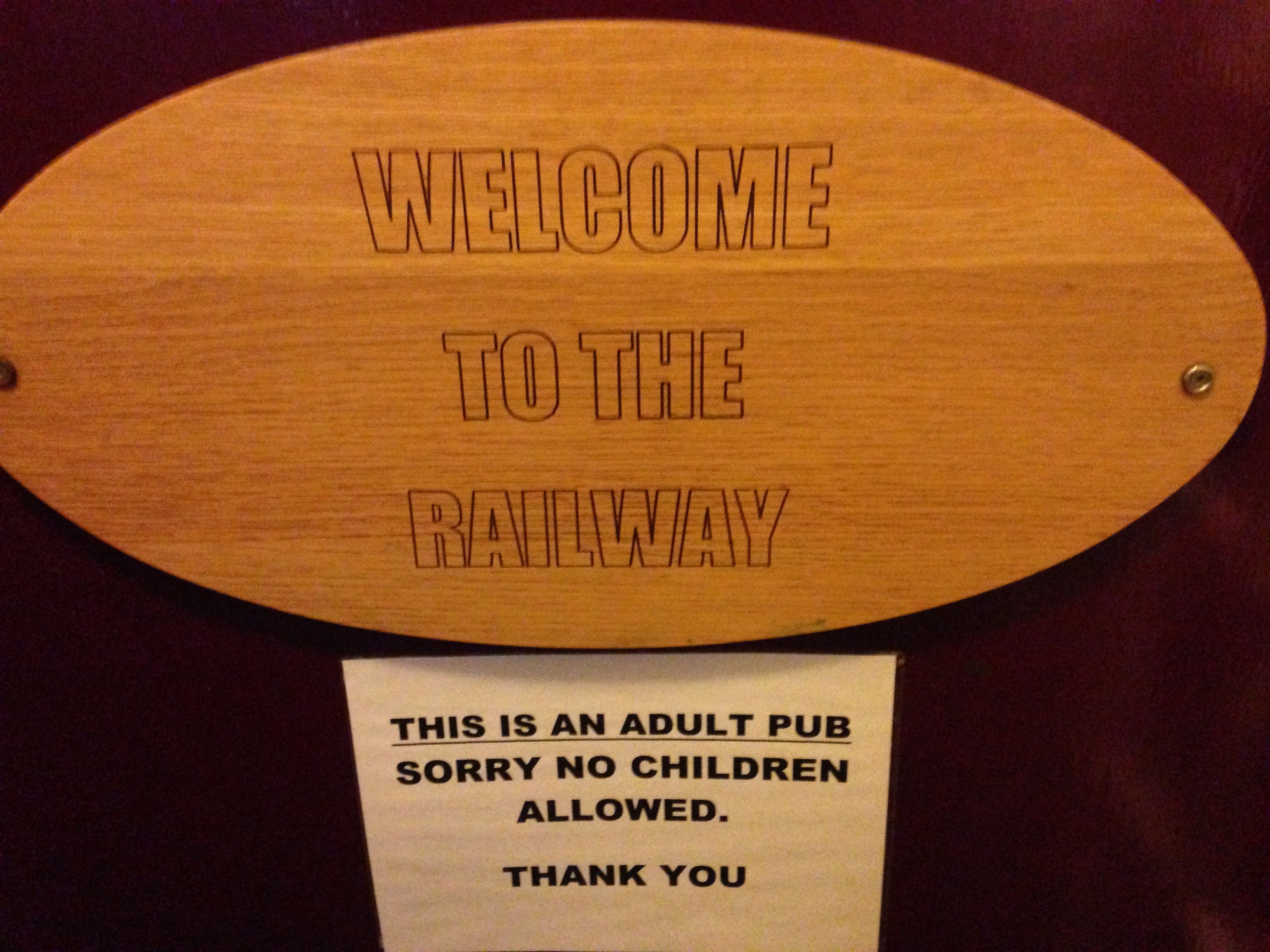
  • Railway, Rose Hill (Robinson’s) – renovated around 1990, a conspicuously smart, spick-and-span suburban pub with extensive fixed seating and a healthy lunchtime food trade
Some may query the omission of the Magnet. While I recognise this is a very well-run specialist beer pub, and with keen prices as well, I have to say its odd layout (which the owners inherited) is such that there’s nowhere I really feel at home. This is one pub that would benefit from knocking through into one with a bar against the back wall and benches around the walls facing it. It would certainly feature in a second ten along with, off the top of my head, Railway (Portwood), Red Bull, Blossoms, Tiviot, Grapes (Hazel Grove) and probably even Spoons’ Calvert’s Court.

Friday, 5 April 2013

Kick off those muddy boots

One of the enduring themes of this blog has been how many rural and village pubs have in effect transformed themselves into restaurants and turned their back on the casual drinker. This is something that has been echoed by Kate Ashbrook of the Open Spaces Society, who complains that too many pubs no longer welcome walkers, horse-riders and cyclists. “You want them to have a nice stone floor and informality, a place where a bit of mud won’t matter because they will sweep it up later,” she says. To that you could add bikers, rural workers and indeed anyone who just wants to have a quiet pint and read the paper.

Clearly in today’s marketplace, serving food, and good food at that, is essential to the viability of most pubs outside urban centres, although the surviving classic wet-only rural pubs such as the Traveller’s Rest and the Red Lion remain some of the most quintessential elements of our pub culture. But it isn’t that difficult to be a food-led pub and still set aside an area near the bar with a few benches for customers who just want to come in and have a social drink. It’s equally easy to have a menu that offers light meals and sandwiches alongside expensive gastro creations, something that, to their credit, the Brunning & Price chain do seven days a week. Indeed, while their pubs are unashamedly upmarket in ambiance, I doubt whether any of them would turn away groups of walkers or cyclists.

It’s also the case that many dining customers will still value going in to somewhere that still feels like a pub and has a group of regulars nattering by the bar.

On the other hand, I had to laugh at this comment on the original article:

Ramblers in my area of the Chilterns turn up to our wonderful local pub en masse i.e. between 10-15 people at lunchtime therefore taking up all the room downstairs, buy a soft drink/tea or coffee, order a sandwich, sit down, pay their bill individually (and to the penny) then leave. They spend very little and are the first to complain about anything and everything - they would be far better off in a tea shop or cafe along the canal. Leave the pubs to the locals and those that want to be there!

A question of balance

If I ran a pub, I’d make sure that the range of cask beers included sufficient variety that as few customers as possible would be disappointed. If I had four pumps, I’d have a classic ordinary bitter, a golden ale, a stronger premium bitter and a dark beer, either a mild or a porter. I suggested here that Bateman's Dark Mild, Whim Hartington Best Bitter and Taylor's Landlord would make an ideal core range. As the number of pumps grew, I might add one or two stronger and/or more exotic beers, but I’d still retain roughly the same proportions. And I’d always remember that, although there’s much to be said for offering more unusual brews, the majority of customers, even in specialist pubs, will be looking for beers in the gold-amber-copper colour range with a strength roughly between 3.5% and 4.5% ABV.

So it’s disappointing when pubs which you think really should know better fail to adhere to the basic principle of offering a balanced beer range. One of my local Wetherspoon’s, which I maybe visit twice a month, often seems to fall short on this front. For example, on one occasion, apart from the usual Ruddles and Abbot, there was nothing on the bar below 5%, which isn’t ideal if you want to keep a clear head at lunchtime. Another time all the guests were dark beers of some description with the exception of one cloudy Belgian-style witbier which I imagine many casual punters would have sent straight back. It really isn’t good if you’re confronted with eight handpumps but can’t find anything you want to drink, or if in Spoons you find Ruddles the least worst option.

I also recently called in a well-regarded free house, not in this area, which to be honest I reckon has one of the most congenial pub atmospheres around. It had eight beers on, one of which was a chocolate porter, and the remaining seven all golden ales. Now, I’ve nothing against golden ales, and many of them are excellent beers, but it would have been nice to see a bit more variety and one or two milds and classic bitters. Wye Valley HPA is a fine brew, but on this occasion their Bitter or Butty Bach might have provided a broader choice.

It’s not difficult, licensees – as far as you can, within the number of beers you can turn over, make sure you offer as wide a variety of strengths and styles as practicable, and don’t neglect beers of sessionable strength in the amber and copper colour range.

Friday, 29 March 2013

Eleven memorable pubs

Boak & Bailey recently published a list of their ten favourite UK pubs (in fact nine), which led me to mull over a similar personal list. This is essentially places where I have had a truly memorable pub experience over the past ten or so years. I don’t claim that it is any sense a list of the best pubs in Britain.

As you might expect, it is much more biased towards the traditional and olde-worlde, with five currently on CAMRA’s National Inventory of historic pub interiors and another – the Black Horse – having been excluded due to a bit of knocking-through, but still very old-school in its atmosphere. All of them, though, are still places that function as real, vibrant pubs rather than just museum pieces. As I have said in the past, at heart I have to conclude I’m more fascinated by pubs than beer.

Most of these I’ve been to more than once, although the Red Lion and Star have only seen single visits, but have really stuck in my mind.

There are plenty of cracking traditional pubs in Stockport but, on consideration, the Nursery must be the cream of the crop. Maybe a forthcoming blogpost could cover my ten favourite Stockport pubs. I’d also like to acknowledge the number of excellent, unspoilt Sam Smith’s pubs in Cheshire, none of which quite made it to this list, although a couple would get on the second twenty. There are also some architecturally superb pubs in Edinburgh such as Bennet’s Bar and the Guildford Arms that I don’t really feel I know well enough.

Edit 20/4/13: post amended to add the Great Western in Wolverhampton which was unaccountably omitted from the original listing.

  • Barrels, Hereford – a busy, lively multi-roomed pub tied to Wye Valley brewery, with a mixed clientele and a proper pub atmosphere
  • Black Horse, Clapton-in-Gordano, Somerset – an ancient pub, allegedly dating back to the 14th century, with stone-flagged floors, old wooden settles, brasses, real fires and gravity-served beer
  • Blue Bell, York – a tiny two-roomer just off the city centre, with front vault, rear snug, central servery and side corridor, described as “a symphony in brown”
  • Digby Tap, Sherborne, Dorset – a small, cosy, cottage-style pub in a back street near the Abbey, with stone-flagged floors, plain food and local real ales
  • Dolphin, Derby – a magnificent 16th century half-timbered pub with a warren of cosy, atmospheric rooms
  • Great Western, Wolverhampton – Holden’s tied pub hidden away round the back of the station, offering the full range of their beers, three guests and Batham’s superb Best Bitter. Classic front bar and a variety of areas rambling back to a conservatory and beer garden. Lively, bustling atmosphere, busy throughout the day
  • Loggerheads, Shrewsbury (pictured) – a rare survivor of the unassuming town pubs of a bygone era, with four small rooms including a wonderful snug with scrubbed-top tables which was men-only until the 1970s
  • Nursery, Stockport – my local pub, a largely untouched building dating from 1939 with a classic three-roomed interior which in recent years has been much more enterprising on the beer front. CAMRA National Pub of the Year 2002
  • Red Lion, Dayhills, Staffordshire – a basic, cottage-style country pub, just one stone-flagged room dominated by a massive inglenook fireplace
  • Royal Oak, Eccleshall, Staffordshire – an impressive pub with an arcaded facade in the centre of this small town which has recently been brought back to life with a stylish and sympathetic renovation by Joules Brewery
  • Star, Bath – a surprisingly shallow pub in a Georgian terrace, with a quirky multi-roomed interior featuring extensive wood panelling and traditional West Country flat Bass on sale

Open and shut case

In the comments on my last post about entrance restrictions in pubs, Martin of Cambridge says: “I'm much more fussed about pubs in the beer guide which don't seem to bother opening at all; see for example several South London pubs opening at 4pm and nearly all so called micro pubs.”

He’s certainly got a point. Over time, in many cases the effect of allowing all-day opening from 1988 onwards seems to have been pubs opening for shorter hours, not longer. Before 1988, most pubs would adhere fairly closely to the standard permitted hours for their area, although opening a bit later at lunchtimes and Saturday evenings was fairly common. If a pub was normally closed even for one session it was something worthy of note.

In the early years of the new licensing regime, most pubs seemed to stick to their previous pattern of opening, and indeed a couple of years afterwards it was still hard to find anywhere open after 3 pm in the centres of Stockport and Manchester. However, the growth of Wetherspoons and other chain pubs, which didn’t close in the afternoon, made them start to reconsider that approach, and nowadays you’ll find that most pubs in town and city centres do open all day.

On the other hand, many pubs with a more local appeal started to take the view that there wasn’t much point in opening at lunchtimes at all, especially during the week, and switched to an evenings-only model, possibly including Friday, Saturday and Sunday lunchtimes, although some don’t even bother with that. This has even happened to some pubs that once did a healthy lunchtime trade with customers from local workplaces.

I’d certainly not want to argue that pubs should be expected to open at times when they can’t trade profitably, and curbing your hours can make it possible for a couple to run a pub with little or no additional staff. However, if they’re doing this, it’s surely vital to display the opening hours outside so people know when they’re going to be able to get in. Even if you’re not going to the pub on that occasion, you can still make a mental note of the hours for a later visit. And, if you turn up and find a pub shut, if you know it will open in half an hour you may stick around and wait; if there’s no indication at all you’re more likely just to go elsewhere.

If you are in a location where there is potential passing and casual trade, limiting your hours can also indicate a certain paucity of ambition and reluctance to cultivate a wider appeal. The amount of trade on offer at lunchtimes is often underestimated – for example, many retired people much prefer going to the pub at lunchtime rather than in the evening, and I’ve come across some pubs that are like a pensioners’ social centre in the afternoon. Plus people nowadays are less likely to work regular, 9-5 hours, so more working people will be around in the daytime. Open a Wetherspoon’s pretty much anywhere and there will be people in for a drink from mid-morning onwards, and throughout the afternoon, even when nearby pubs are firmly shut.

Another point is that lengthy and predictable opening hours are in themselves a selling point even to potential customers who aren’t really going to take advantage of them. You know Wetherspoon’s are open all day, and so you can plan a visit with confidence without having to check what the actual hours are. And one word-of-mouth report that someone visited a pub at a time when they might reasonably have expected it to be open, and found the door firmly shut, could do a lot of damage. If a pub gets a reputation for scarcely ever being open it will make it much less appealing to casual customers.

At the end of the day, pubs are there to provide a service to their customers, and if they can’t be bothered opening when people want to visit, it will result in a black mark for that particular establishment and potentially also the entire sector.

Saturday, 23 March 2013

Beard-free zone

The Blue Bell pub in York has been excluded from the 2014 Good Beer Guide by the York branch of CAMRA because at times it operates a restrictive admissions policy. Now, this is a pub I am very familiar with and would place it in my Top Ten of British pubs. It’s a tiny, unspoilt place with front public bar, central servery and rear snug, connected by a corridor along one side. Fifty people would fill it. So I can well understand why the licensee chooses to put up “Private Party” signs to keep out the stag and hen parties that infest York on weekend evenings. During the rest of the week I doubt whether there’s a problem. He says:
'We do get nice strangers coming in the pub but on Saturday nights and race days York city centre is a nightmare.

'I have been operating the same way for twelve and a half years and no one has complained but it seems we have a younger committee now with different more politically correct views.

He also complains of “'weirdy beardies' visiting the pub and 'asking to sample seven beers, then buying a half'.” I have to say if I ran a pub I would regard people as taking the piss if they asked for more than a couple of samples before buying.

This decision really says a lot more about York CAMRA than it does about the Blue Bell. Excluding one of York’s classic pubs for such a prissy reason devalues the Good Beer Guide. I doubt whether the pub will lose any trade, and next time I’m in York I’ll certainly make a point of visiting it.

Friday, 22 March 2013

European whine lake

There have been suggestions that this week’s cut in beer duty may be judged illegal under European law, as it supposedly discriminates against wine in relation to beer, but I have to say I’m not entirely convinced. The 27 countries of the European Union have widely differing duty regimes on different types of alcoholic drinks, both in absolute terms and relative between categories. 15 of the 27 countries – all, obviously, wine producers – levy no duty whatsoever on table wine, while wine duty in France is negligible.

France recently imposed a swingeing hike in duty on beer (which is mostly imported) while leaving that on wine (which is mostly home-produced) untouched. In the past, there have been several occasions when the British Chancellor has frozen spirits duty while raising beer duty, and in 2010 Alastair Darling imposed a 10% increase in cider duty which was subsequently cancelled after the General Election.

Given the huge disparities in duty rates that currently exist between countries, and the many precedents for altering the relative duty rates between different categories, I can’t really see that this suggestion has a leg to stand on. Also, as I pointed out here, prior to the Budget the level of duty paid per unit of alcohol on wine and beer was pretty much identical, so it’s hard to see how there was any discrimination in the tax system.